HyMotor
Clean and efficient energy
with simplicity and reliability
Our mission
At HyMotor, we are committed to providing clean power with no trade-offs.
Efficiency
By designing the power generator to have near-constant volume combustion
and recovering waste heat,
HyMotor reduces fuel consumption.
Sustainability
Lean combustion and no critical materials
unlock environmentally
and economically sustainable
power production with HyMotor
Flexibility
HyMotor's ability to operate with
natural gas, hydrogen or methanol
ensures its adaptability to
future energy landscapes.
Our Value

The solution
HyMotor offers an integrated trigeneration solution tailored for datacenters: electric and cold power from a single simple and reliable system.
Indeed, datacenters are increasingly constrained by cooling demand, grid congestion, water consumption and backup energy requirements. Today, these problems are usually solved with separate and expensive systems: backup generators and electric chillers.
HyMotor performs the same task up to 25% increase in electric efficiency, up to 50% CAPEX reduction for the chiller, and with zero water consumption.
Its development
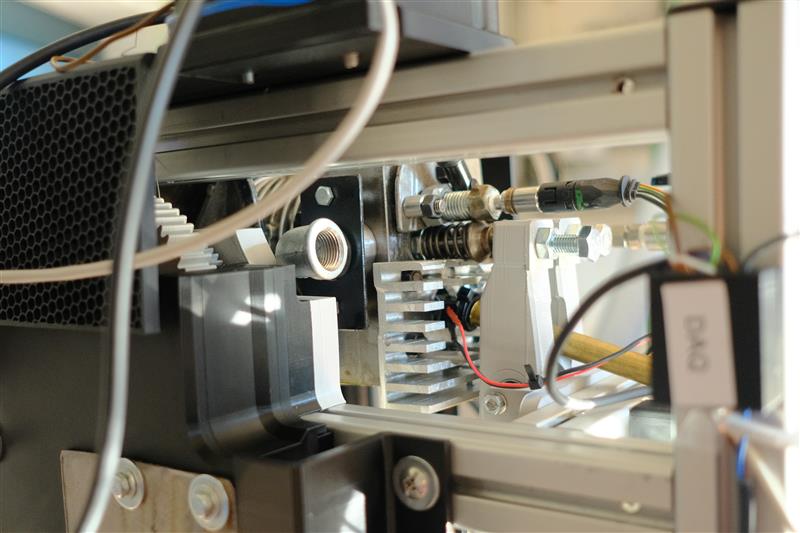
HyMotor is currently under development, with a small-scale prototype operating at ambient intake temperature and a quasi 1D model of the most critical component integrated thermodynamic model of the assembly, predicting efficiencies above 50%. The next step is to build and test a representative prototype at operational temperatures and pressures, validating performances and enabling the scale-up of the technology.
Technology
HyMotor thermodynamic cycle
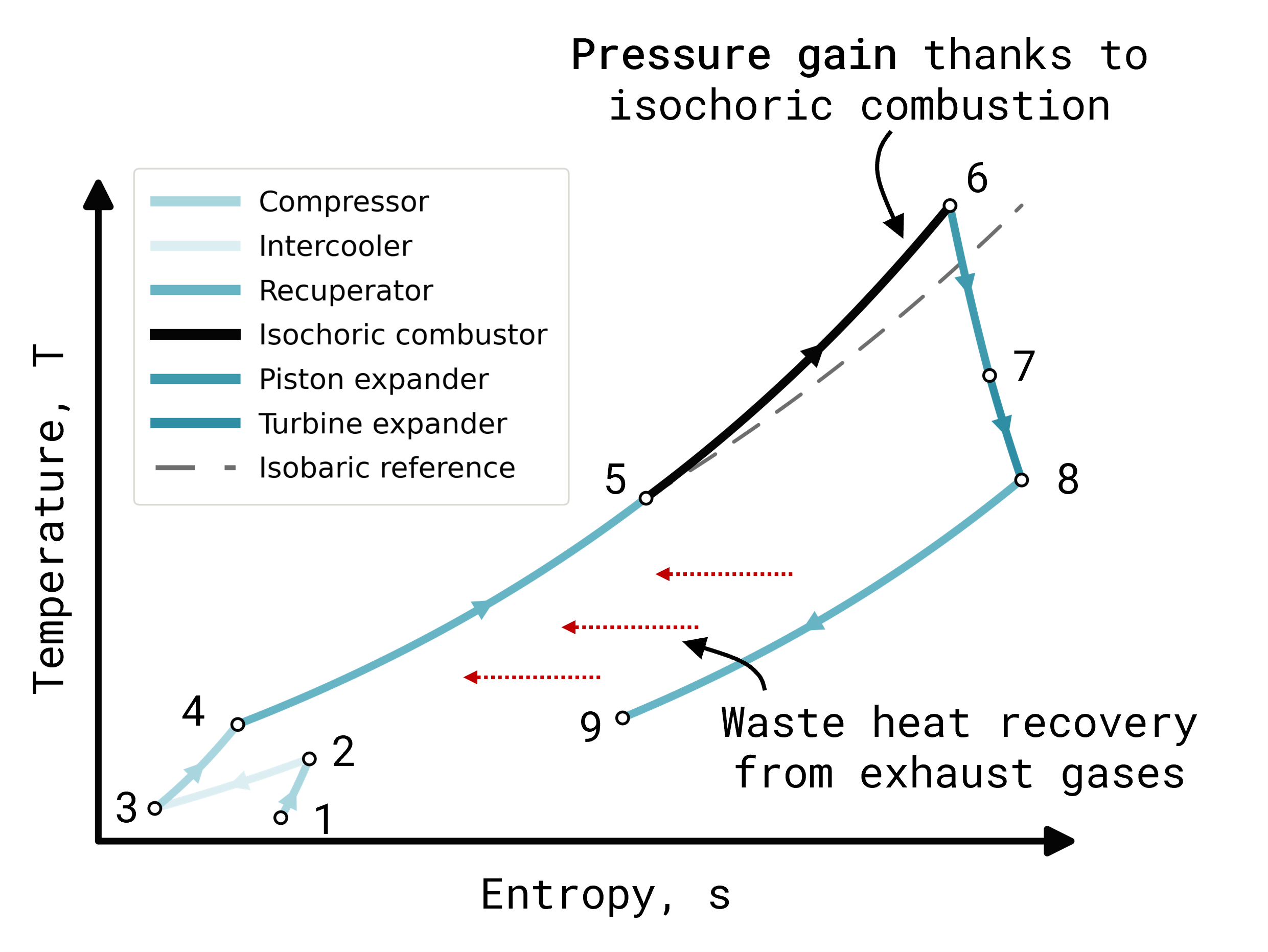
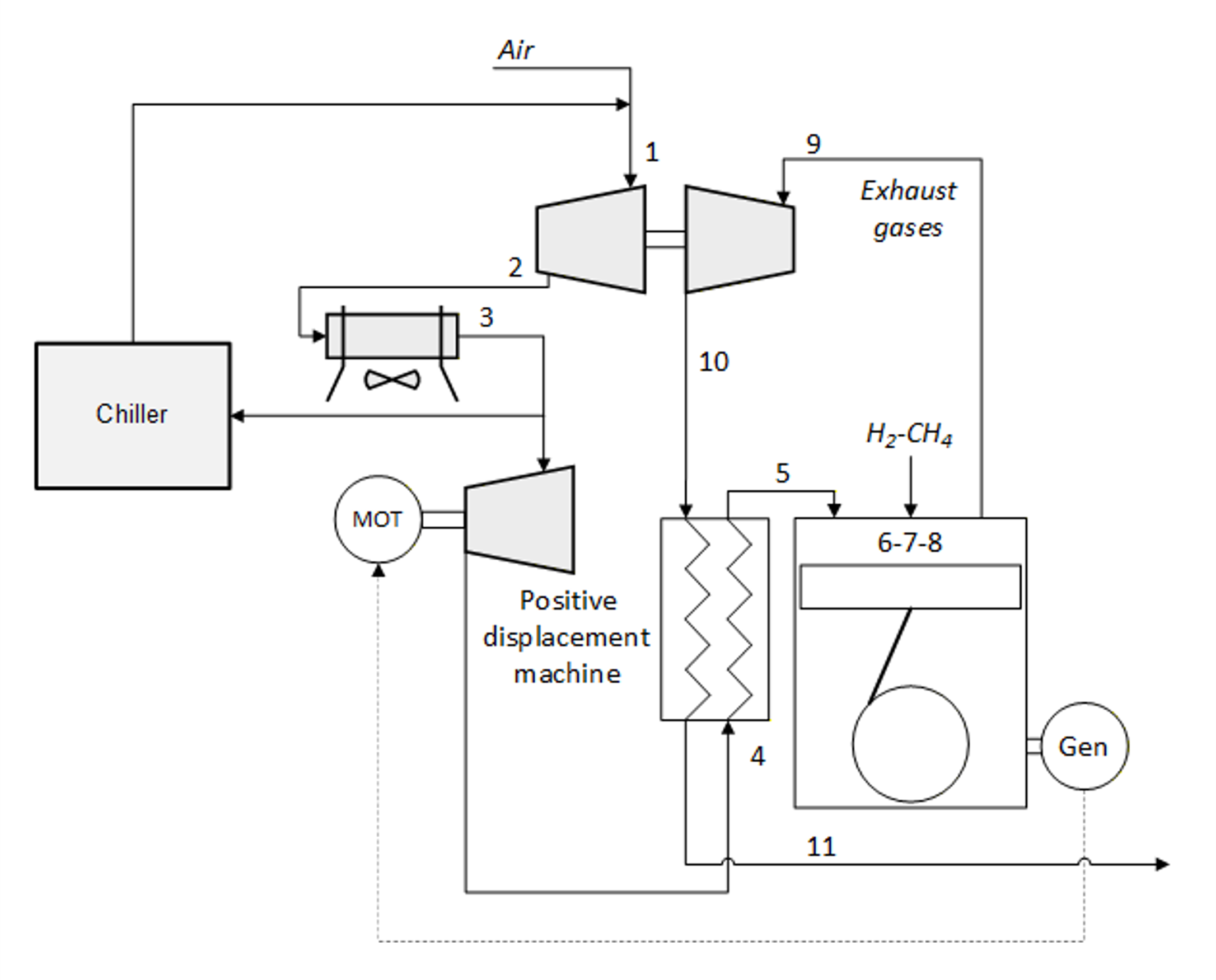
HyMotor is based on an advanced air-breathing thermodynamic cycle designed to convert fuel energy into multiple useful outputs: electric power, thermal power and cooling power. At the heart of the system, ambient air is compressed, heated and further pressurizedthrough combustion, expanded to produce mechanical work, and then used through heat recovery and cooling stages. Air is first compressed two stages. The first stage is a dynamic compressor, while the second state is a positive displacement machine as a screw compressor. The air is then preheated in a recuperator and it is injected in the internal combustion expander. Together, fuel is then injected in the combustion chamber, where near-constant volume combustion happens. The high-pressure, high-temperature gas expands in the reciprocating expander, where combustion occurs as well.
Near-constant volume combustion and heat recovery
A key feature of HyMotor is the use of near constant-volume combustion. As a result, combustion produces not only a temperature increase, but also a significant pressure increase inside the chamber. This is a principle already found in internal combustion engines, but not coupled with heat recovery, as in HyMotor! Indeed, exhaust heat can be transferred to the incoming compressed air before combustion, reducing the amount of fuel required to reach the target operating temperature. The system is built with non-critical materials for sustainability, and uses off-the-shelf components for supply chain maturity. HyMotor can also operate with multiple fuels, as hydrogen or biogas or natural gas.
Trigeneration potential
HyMotor enables efficient trigeneration by directly coupling its power cycle with an air cycle machine, commonly used for aircraft cooling. This integration converts available compressed air into cooling capacity with low CAPEX, zero water consumption,fewer conversion steps, and no refrigerant fluid. All of this is achieved with a single and simple system.
Team
HyMotor is formed by two researchers and a professor of the department of energy of Politecnico di Milano with experience in hydrogen systems and experimental research. HyMotor is advised by a pool of professors with expertise in energy conversion systems, hydrogen technologies, and internal combustion engines.

Francesco Battistella
CEO

Thomas Dalberto
CTO

Gianluca Valenti
CSO

Ennio Macchi
Advisor

Stefano Campanari
Advisor

Tommaso Lucchini
Advisor
Frequently Asked Questions
Q. How does HyMotor differ from fuel cells?
HyMotor convert fuel into mechanical energy via constant volume combustion in a reciprocating expander. On the other hand, fuel cells convert fuel directly into electrical energy via electrochemical reactions, requiring more controlled operating conditions difficult to monitor at larger scales and expensive catalysts or high temperatures.
Q. How does HyMotor differ from internal combustion engines?
Inside HyMotor cylinders there is no compression but only combustion and expansion. The compression is carried exclusively by turbomachines, before the heat recovery. HyMotor thermodynamic cycle is therefore fundamentally different from both Otto and Diesel cycles where most of the compression occur inside the cylinders. Turbochargers in internal combustion engines only assist in the intake process increasing power density.
Contact Us
If you want to collaborate, partner up, or are simply curious to know more about the tech and team, please contact us by filling in the form below. We’ll get back to you as soon as possible.
Cookie Preferences
We use cookies to improve your experience on our site. You can choose which cookies to allow below.